
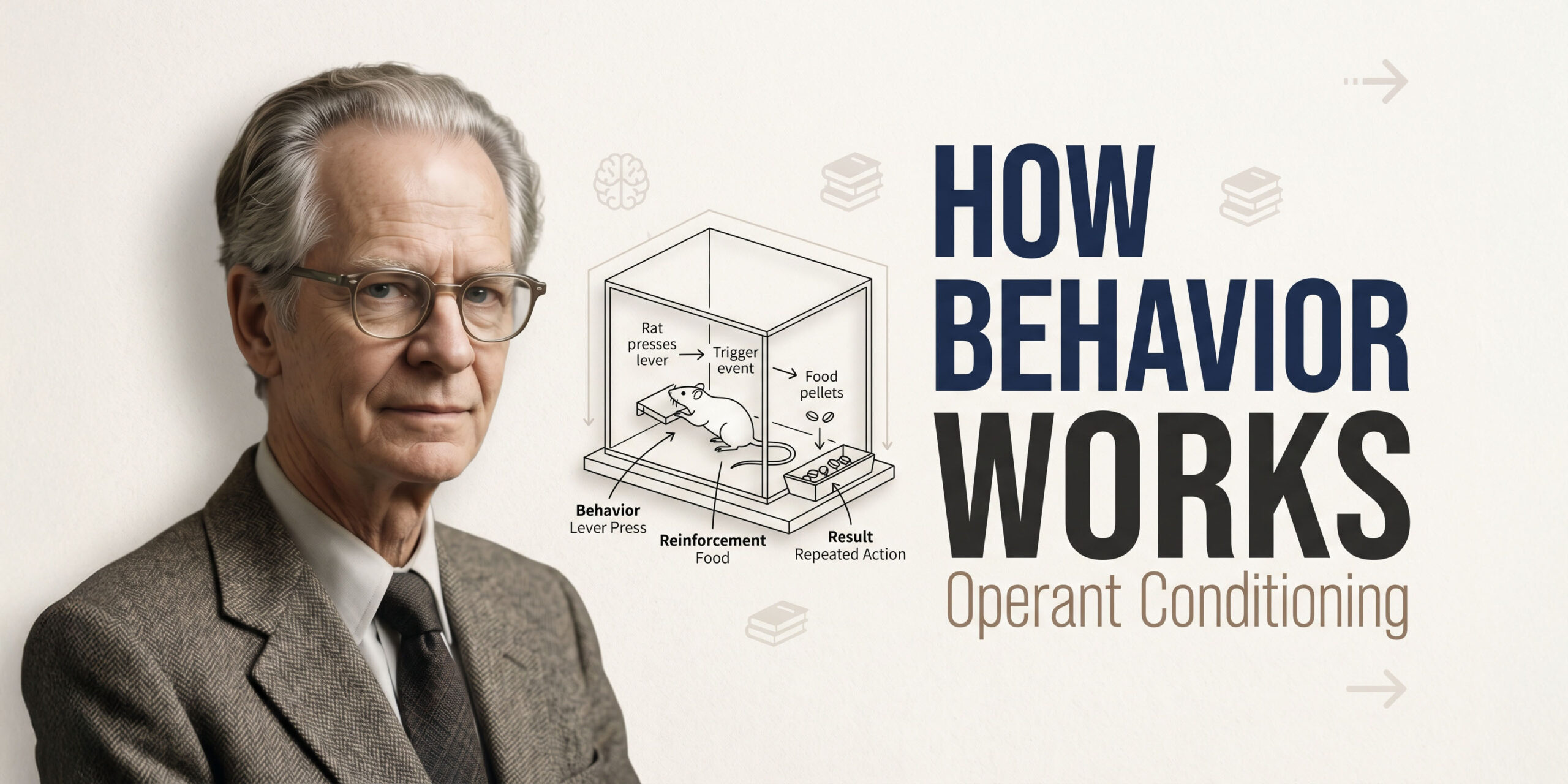
Operant conditioning, developed by B.F. Skinner, explains how behavior is shaped through positive and negative reinforcement and punishment. It focuses on how actions lead to consequences that strengthen or weaken responses. Understanding this concept helps in learning behavior patterns, improving teaching methods, and analyzing real-life decision-making processes effectively in both humans and animals.
Introduction to Skinner and Operant Conditioning
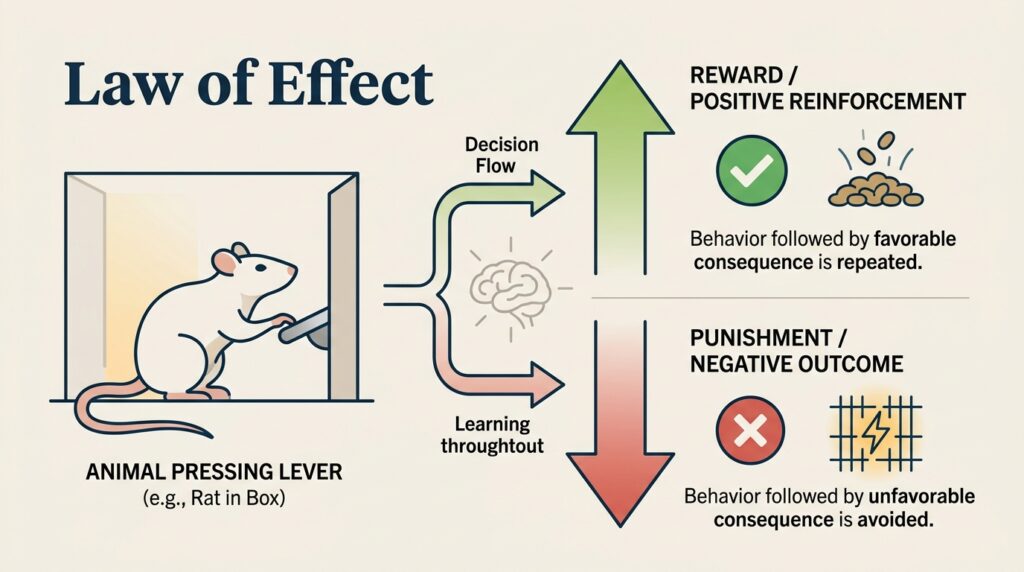
So this term is given by B.F. Skinner, and the first thing that you have to remember for every competitive exam is that before B.F. Skinner and Thorndike both talked about operant conditioning. Thorndike gave three main laws and five subordinate laws. You can also call them secondary laws. The law of effect is one of these three laws. Skinner’s experiment is based on this law of effect.
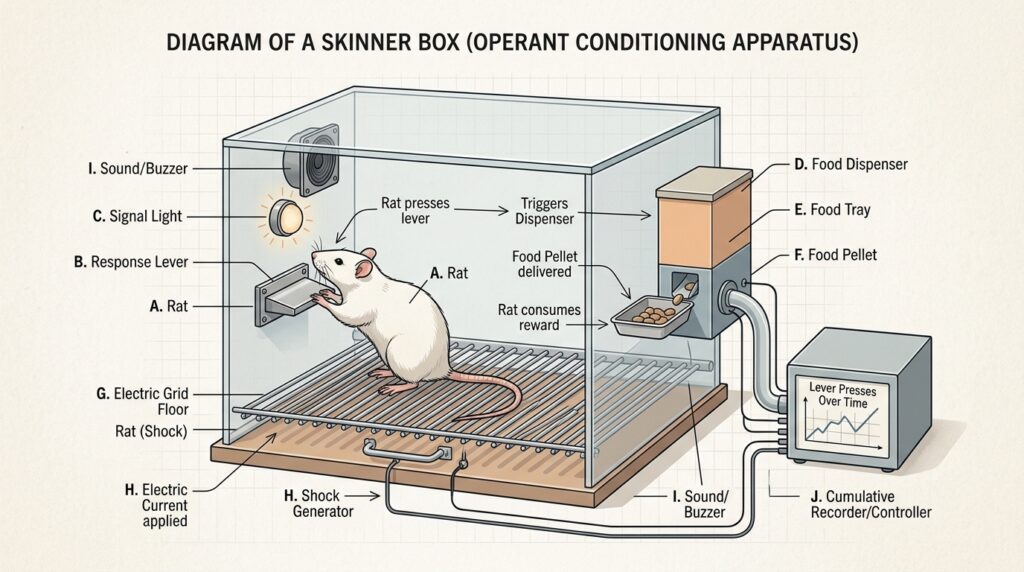
So if it is ever asked, then friends, because of the law of effect, Skinner conducted the experiment. He did not do it directly. However, his chamber, which we call the Skinner box, can also appear in questions.
Just like earlier work shows that if it fights, then it will not be able to appoint packing for another. So it will be able to press the button. We conduct this experiment on rats. You should know a little about the rat experiment. If you understand the experiment, then you automatically understand the rest of the things.
Skinner Box Experiment
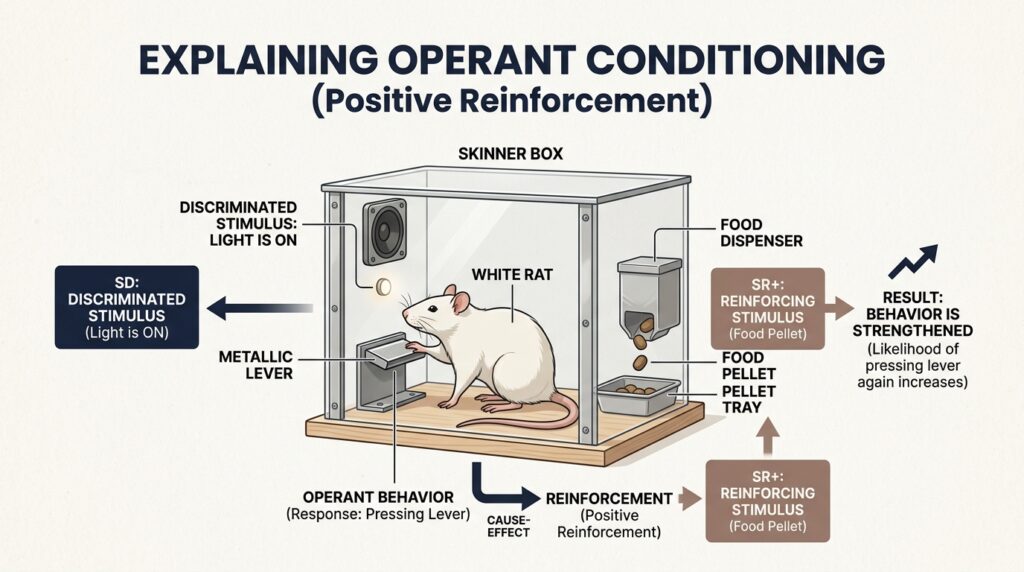
We have already talked about this box and we call it the Skinner box because B.F. Skinner worked on it. Now in this, he installed different types of buttons and keys; suppose this is a lever, this channel subscribe here, and if it takes a wrong step, like if it presses, then here they say, if it presses this then from here, okay, you have to keep this in mind. What you have to keep in mind is what Skinner did in this experiment and how he conducted the experiment.
Initial Setup of the Experiment
First of all, here the experimenter is doing the experiment, whom we are calling the experimenter, from here he put food inside, so when the food appeared inside, the rat saw it, and the rat ate it. It understood that food can come inside, which had already come in front of it, so now they stopped putting food, but initially they had put food, you have to keep this in mind.
Behavior of the Rat
Now when after some time the rat became hungry, then what will it do, it will start exploring this box. Now it will see, it will try pressing something somewhere, it will try scratching somewhere, maybe something will happen. So here it will use its hands and legs, the rat will hit here, will try that food comes from somewhere inside.
- If it presses the correct lever and the correct light here gets signaled, then what will happen, food will come inside.
- If this does not happen, then what will it feel, it will get a current, basically.
Reinforcement and Punishment Outcome
If it does the right thing, then in response what will come from here is food, which will be reinforcement for it, so for the next time it will keep this in mind, it will actively try that from here, from somewhere, food comes inside. So this thing, here one day will be fixed, meaning it will keep trying, and if it has made the correct attempt and that attempt is successful, then from here it will be done, which will strengthen its response and will stop its other activities.
But if it is doing wrong and it presses wrongly, the signaling light was not correct and it pressed the lever and it got current, then that current will be in a way its punishment.
Reinforcement and Punishment in Operant Conditioning
Now in this experiment, in Skinner’s operant conditioning, there are two things to keep in mind:
- one is reinforcement
- the second is punishment
Reinforcement means strengthening, like the rat was getting food from here, so that got reinforced. Now reinforcement can be of two types:
- positive reinforcement
- negative reinforcement
You have to keep this in mind that even if reinforcement is negative, the final situation is that strengthening will increase, it will not decrease. In punishment, it will decrease, whether it is presentation, positive punishment or removal punishment, you have to keep this in mind.
Positive and Negative Reinforcement
Now in positive reinforcement, if we take an example of students, and if he has done some good work, then you set two questions or at that time you are giving him praise, so that is positive reinforcement because you have added something good. You appreciated him, you gave him a good gift, so that is adding something good, that is positive reinforcement.
In negative reinforcement, what happens is you remove some distracting thing or any wrong thing from there. For example, your child is sitting in a room and studying, and because of storm or environment some gate is making noise again and again, because of that noise the child is getting disturbed. What did you do, you closed that gate or locked it, so the sound of the gate stopped. So what happened, something wrong was happening, you removed that for distraction, this is negative reinforcement because now he can study peacefully. So here also reinforcement came, behavior strengthened.
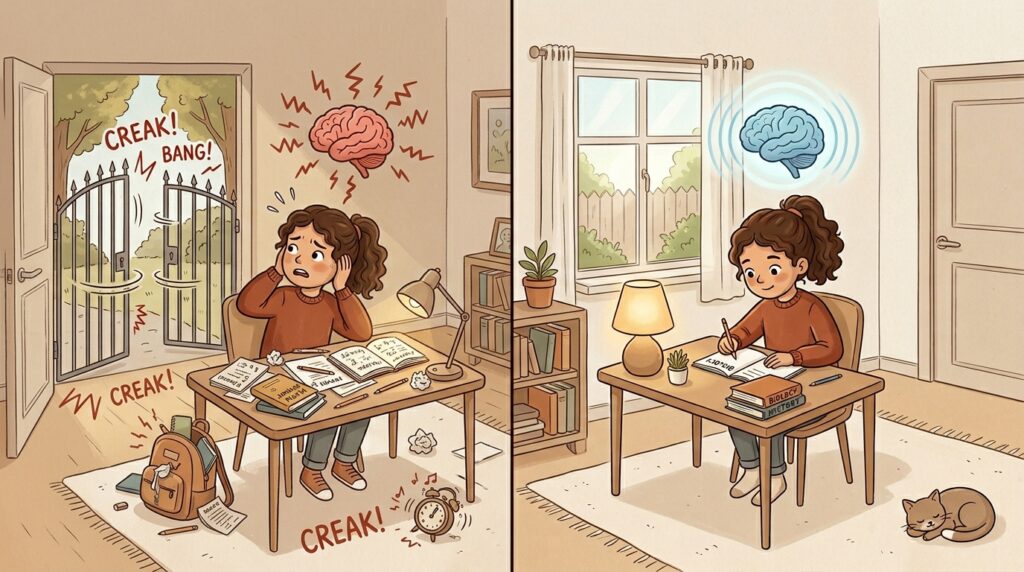
If we take the example of the child who is studying, then his focus will increase whether you are appreciating him or giving him a prize, then also enhancement will happen that next time also I want the prize and I want to study well. So his thinking of studying will become strong. In negative reinforcement, you closed the gate, because of which he could study peacefully, so from this also his focus on studying increased. So because of reinforcement, the behavior of studying got strengthened.
Punishment in Operant Conditioning
Now if we talk about punishment, this will be opposite. This was positive reinforcement, you can call it presentation reinforcement because you are presenting something. Negative reinforcement can be called removal reinforcement because you are removing something wrong. Similarly, presentation punishment can be called positive punishment, and removal punishment can be called negative punishment.
In presentation punishment, what happens is you are adding something wrong. If the child did not perform well, you beat him or scold him, then that is punishment because you are adding something bad. If you snatch his mobile, then that is also punishment.
In removal punishment, you remove something good, like you took away his mobile or you stopped his favorite food for some time and gave him something he does not like, so basically you removed something good, that becomes punishment.
Now in punishment, behavior will decrease, in reinforcement behavior increases, you have to keep this in mind. If I explain according to the rat, in reinforcement it was getting food, in punishment it was getting current. This is what you have to remember, this is all in operant conditioning.
Schedules of Reinforcement
Now reinforcement and punishment, when someone does something wrong you give punishment, but in reinforcement, will you reinforce every time? Meaning every time on pressing the lever it will get food or it will get after intervals? So there are schedules of reinforcement, in which either you give reinforcement after every response, that is continuous reinforcement, or partial reinforcement in which you do not give every time, you give after intervals.
For example, continuous reinforcement means if your child has two tests in a week and he performs well in every test, then after every test you give him a chocolate. This is continuous reinforcement.
But partial reinforcement is that suppose you reinforce him in one test and in the next you just praise him, then in the third again you give chocolate, so after interval you reinforced, that is partial reinforcement.
In partial reinforcement, two things can happen:
- interval
- ratio
In interval, like I told you, after one test you give, in variable interval sometimes after one, sometimes after two tests. for ratio, sometimes you give one chocolate, sometimes two, sometimes three, so that becomes variable ratio. So there are four types:
- fixed interval
- variable interval
- fixed ratio
- variable ratio
You have to keep this in mind.
Difference Between Classical and Operant Conditioning
Now we do not use reinforcement word in classical conditioning, you have to remember this. Skinner said we use reinforcement, because it increases the probability of response. In reinforcement, both positive and negative increase behavior.
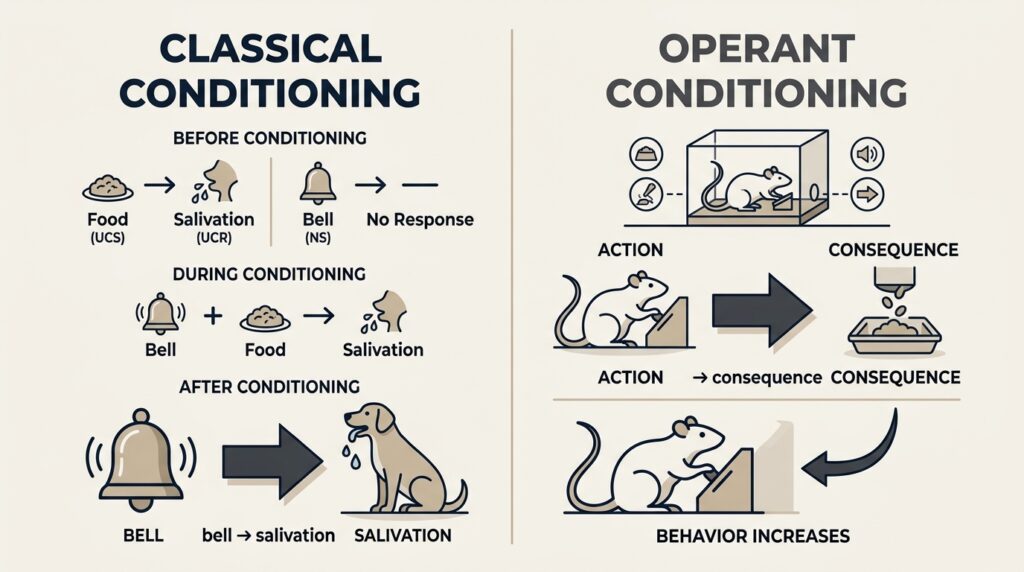
Now you should know the difference.
- In classical conditioning, the response is involuntary, like in the dog experiment salivation was involuntary.
- But in operant conditioning, the response is voluntary, like the rat is moving, pressing lever.
- In classical conditioning, reinforcement occurs before response, like bell rings before salivation.
- But in operant conditioning, reinforcement occurs after response, like after pressing lever food or current comes.
- In classical conditioning, the dog was tied, but in operant conditioning the rat is free to move.
- In classical conditioning, artificial stimulus creates natural response.
- In operant conditioning, behavior depends on consequences like food or current.
So this is the difference, and when you write, you can use diagrams, graphs, flow charts so that you can easily connect.
Stay connected with us !