
We are going to talk about Carl Rogers, who takes a humanistic approach. We call it “minute” because of the approach—I mean, you must have read about many applications—this humanistic approach works in cognitive psychology or the constructivist approach, and among them Carl Rogers works in the client-centered approach. Carl Rogers’ non-directive counseling, also known as person-centered or client-centered therapy, is a humanistic approach focusing on the client’s ability to self-actualize and solve their own problems. It emphasizes empathy, unconditional positive regard, and congruence from the therapist, rather than providing advice or interpretations.

What All Will We know
What all will we study in this? He has focused a lot on the self-actualizing tendency, and has talked about its importance as well.
- What all will we study in this? He has focused a lot on the self-actualizing tendency and has talked about its importance as well.
- So you should know about the self-actualizing tendency, and this term is coined by Carl Rogers.
- What is the self, what are its components, what is the self, and what is the real self? What are the positive and negative aspects? We will talk about that.
- He talks about the phenomenal field and explains it completely.
- Talks about person-centered perspective, talks about good life, the principles you can follow to lead a good life.
- We will talk about the contributions of the theory, what overall contribution it had, and the criticism—why and which points lead people to criticize it.e of which it is criticized.
Carl Rogers and Humanistic Psychology
So if we talk about Carl Rogers, then the time period 1902–1987 is printed. He was born in 1902 and expired in 1987, his death happened. He is considered a humanistic psychologist.
Many times you get such questions as which is a humanistic psychologist, which is not, which is a behaviorist, which is not. So in such questions, you have to remember that Carl Rogers is a humanistic psychologist and he focuses on the self-actualizing tendency.
He believes that the self-actualizing tendency is very helpful in shaping human personality, and because of that, personality is molded or shaped in a particular way. This is related to personality development.
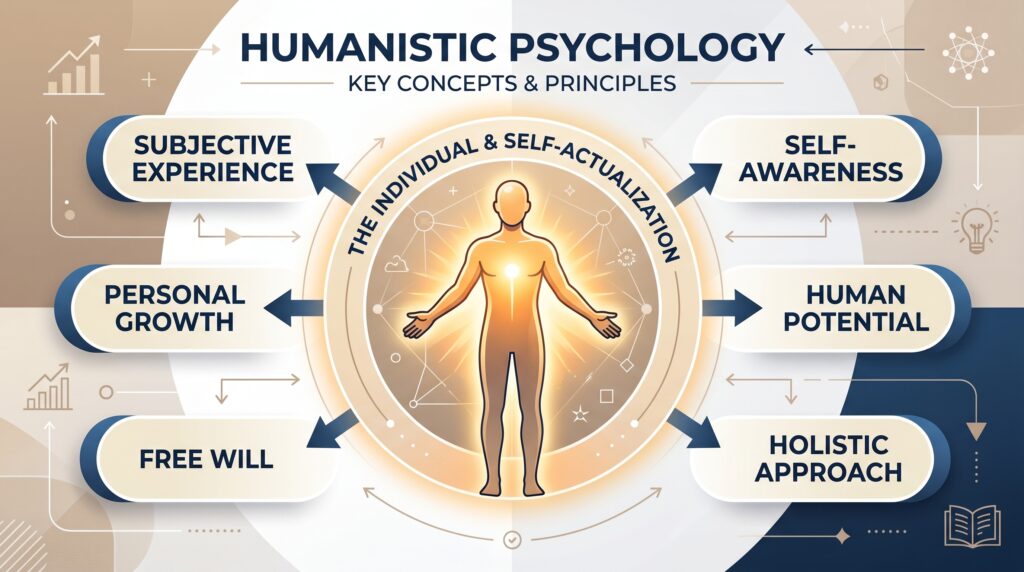
Humanistic psychology focuses on subjective experience. This theory depends on subjective experience, which is why we call them humanistic psychologists, and they believe in subjective experience—that is, what you experience, whatever happens, the subjectivity you activate. They focus more on that subjectivity. Activity.
Phenomenal Field
The changes that occur in the phenomenal field, as I told you, he explains the phenomenal field very well.
What is the phenomenal field: the complete environment around you. Whatever things are happening around you, you will react according to those only. If someone said something to you and you gave a reaction, so what is that—that is the phenomenal field.
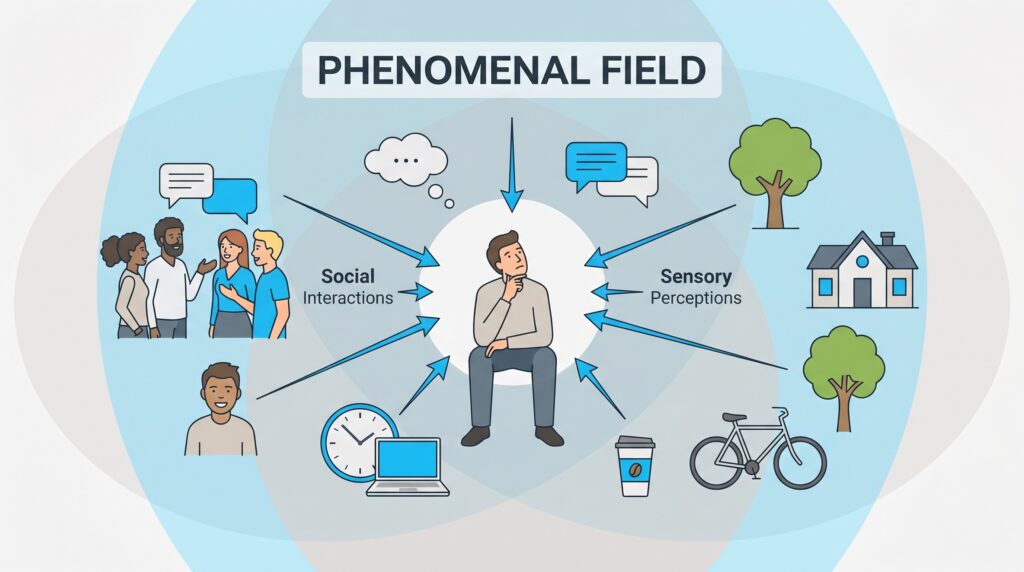
The changes in the phenomenal field are because of which changes happen in human personality, in their behavior, or whatever is prominent.
Self-Actualizing Tendency
So what else does Carl Rogers talk about: he emphasizes the self-actualizing tendency, humanistic psychology, and focuses on subjective experience.
Self-actualizing tendency—this is an important term—you have to remember that if this term comes up anywhere and someone asks who gave it, then you should credit Carl Rogers.
Self-actualizing tendency refers to a person’s basic instinct, the inner feeling of what they can do, which helps in bringing out their highest possible potential.
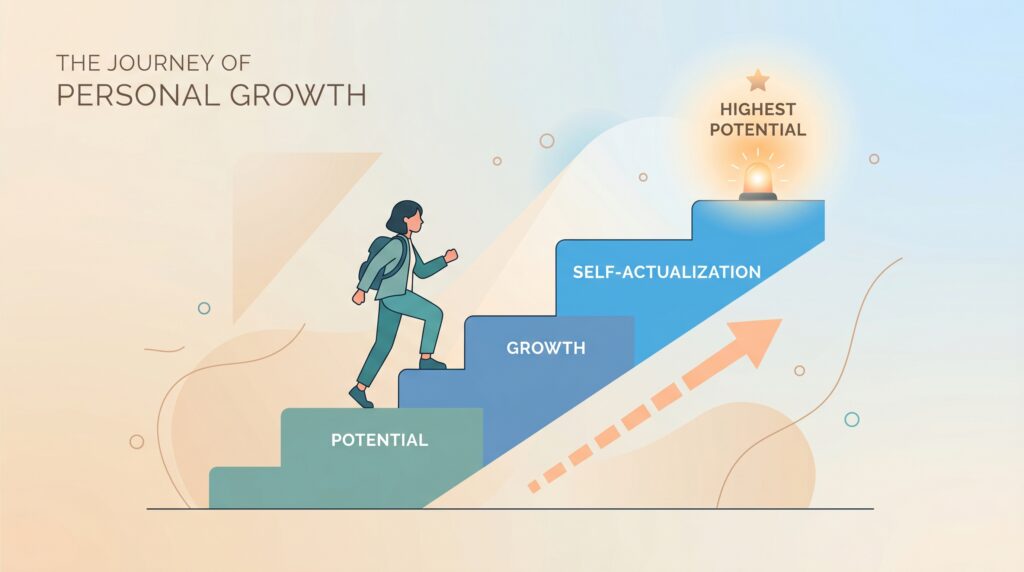
Basically, self-actualization tendency refers to the person’s basic instinct to achieve his or her highest possible potential. That basic instinct, that basic drive, that internal motivation is being talked about.
In this, personality development is based on person-centered counseling and scientific theories and research, on which it depends. It highlights free will—that you do what you want, you experience what you want to experience.
So this is free will, and human potential—how you will use it for good work, for a good life—we discussed that.
Self-Concept
Self-concept—what we think about ourselves. Suppose you have had a fight, but you are not getting a job, so what you start doing is thinking about yourself—what do you think about yourself?
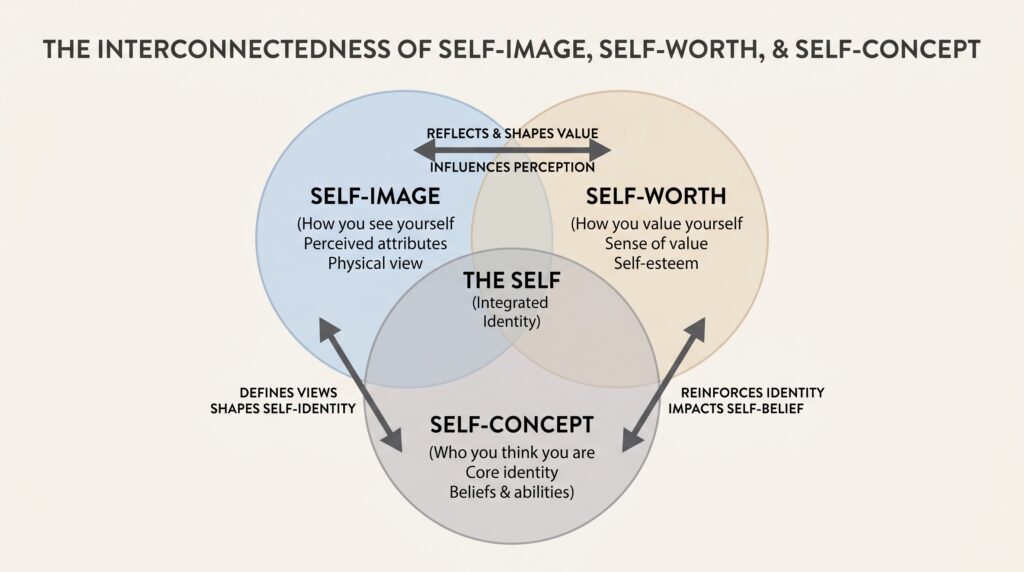
Rogers says specifically that what you think about yourself, others will think about you accordingly. Self-worth is what you think about yourself, and it develops in childhood when interaction with parents starts.
If we talk about self-image, how we see ourselves, what image we have in our own eyes. There is also the image of others—what people think about someone—but in self-image, what matters is how you see yourself. Self-worth is what you think about yourself; self-image is how you see yourself.
Self-Image and Its Influence
Self-image influences overall body image and behavior. What you see about yourself will affect your body also—whether you see yourself as good, bad, beautiful, or ugly.
Many times it happens that a person may look beautiful to others, but internally that person may be struggling, thinking, “I don’t look good,” “I have pimples,” so that is because of what they think about themselves. So if you think good about yourself, your self-confidence increases.
Real Self and Ideal Self
Role model—why do we call someone a role model? Because we want to become like them. That is the ideal self—what you actually want to become. There is a need to achieve consistency between the real self and the ideal self. Real self is what you are, ideal self is what you want to become.
When self-image is similar to the ideal self, and there is more overlap, then the person can achieve self-actualization more easily, meaning they can reach their highest potential and become what they want to become.
But when there is little overlap between real self and ideal self, then it becomes difficult to become what you want. For example, if a person wants to make six-pack abs but is currently very overweight, then reaching that point will be difficult. So, you have to remember this.
Positive and Negative Self-Concept
Positive self-concept — if you think positively about yourself, you will be happy.
Negative self-concept — if a person always thinks negatively, blames themselves for every problem, thinks “it happened because of me,” then negativity increases a lot.
Phenomenal Field and Self-Concept Formation
Now comes the phenomenal field—Carl Rogers describes the phenomenal field as a person’s subjective reality.
Whatever is around an individual, all experiences, objects, people, thoughts—everything forms the phenomenal field. Individual and environment interact, and from that, the self-concept is formed.
Self is not a fixed result; it is flexible, which is why it is called fluid. It is a conceptual pattern related to values.
Person-Centered Perspective
Person-centered perspective—he believes that all people are good, no one is bad. Like a plant needs water and nutrients to grow, similarly, a person needs the right environment. A person is transparent; what you see is what they are.
Unconditional positive regard—accept a person as they are. Everyone is different, and you have to accept diversity and individual differences.
Empathy
Empathy—if someone tells you their problem, you listen carefully, try to understand, and feel what they are feeling, and then give a solution—that is empathy.
Good Life or Fully Functioning Life
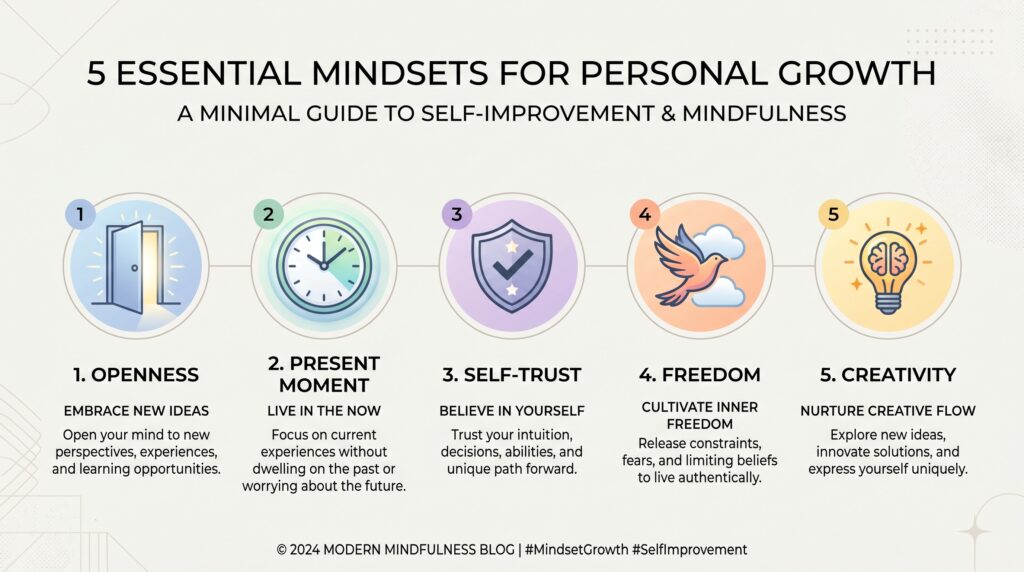
Good life or fully functioning life—he gave some principles:
- Being open to experience—trying new things
- Living in the moment
- Self-trust—believing in your decisions
- Freedom of choice—doing what you want and taking responsibility
- Creativity—having a high creative level
These principles help in achieving a happy, satisfying, and high-functioning lifestyle.
Contribution and Criticism
Contribution—he emphasized positive aspects of human personality, focused on experience, and encouraged trying new things.
Criticism—he is too positive; not everything is always positive. Too much self-focus can lead to narcissism. Also, he does not clearly explain the negative aspects of human behavior.
He says individuals are good, but then how can society be bad if it is made up of individuals? That is why this theory is criticized.
Conclusion
In conclusion, Carl Rogers ‘ theory focuses on self-actualizing tendency, self-concept, and subjective experience as key elements of human personality. It explains how individuals grow, develop, and shape their behavior based on their experiences and inner potential.
At the same time, the theory highlights the importance of self-image, real self, and ideal self in achieving personal growth. It also emphasizes concepts like empathy, unconditional positive regard, and living a good life.
However, although the theory is highly positive and growth-oriented, it also faces criticism for being too optimistic and not fully addressing the negative aspects of human behavior.