
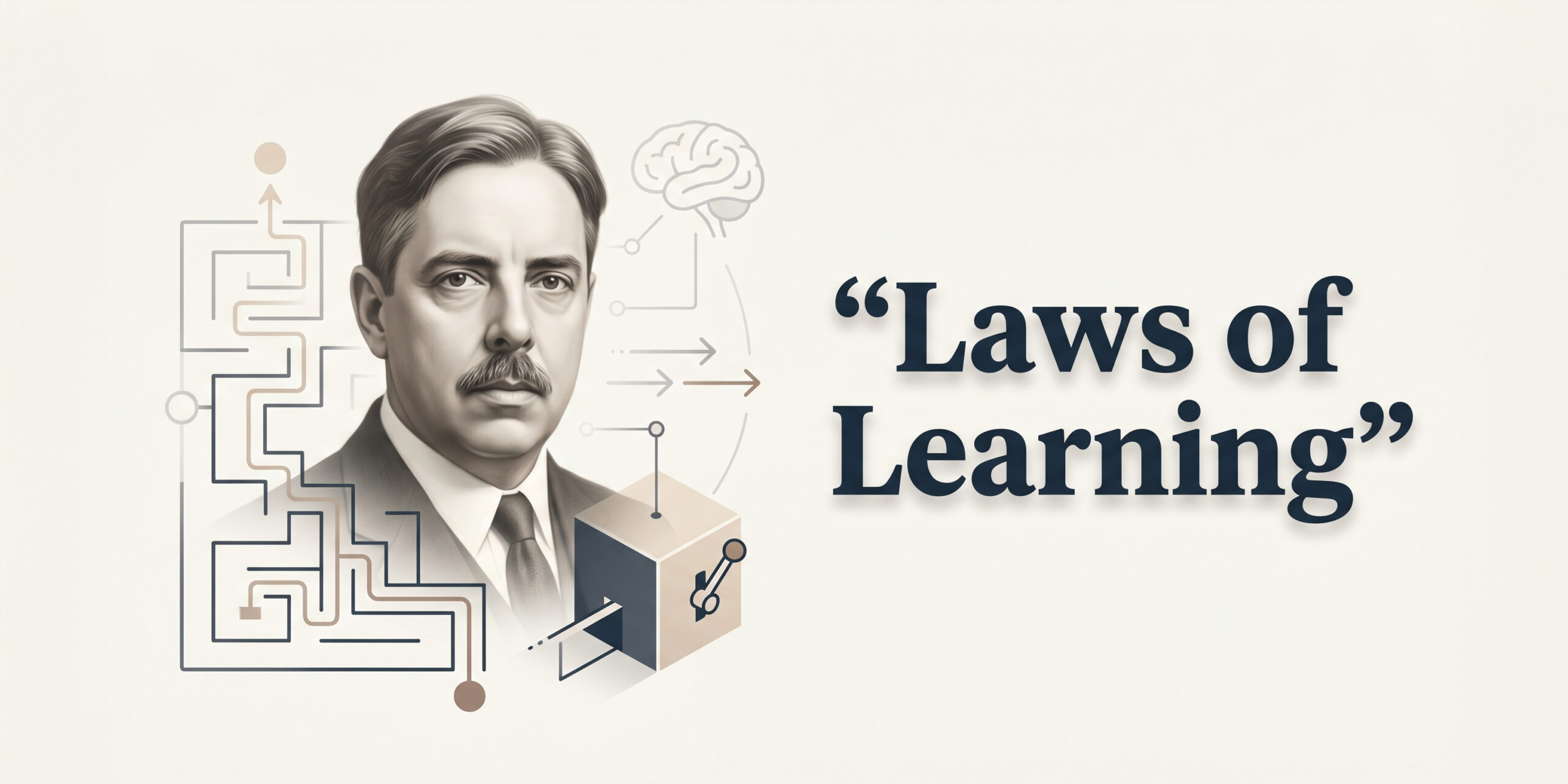
In this Article, we’re going to talk about Edward Thorndike. We’ll discuss learning through trial-and-error, along with the Cat experiment and the fish experiment. Also, we’ll focus on the primary and the secondary law of learning, which includes readiness, exercise (practice), and effect, along with concepts like recency, intensity, and attitude. Let’s begin…
Introduction to Thorndike’s Theory
But this is a little complete full name medical college, they talked about related results subscribe, so this was talked about in place of Bollywood, good night in Urdu. After this, many years later, B. F. Skinner also established a response or problem regarding his relationship. At the beginning of the board, until someone discussed this, it talks about subscribing and connecting them. It is said that it has melted, so you have to remember this.
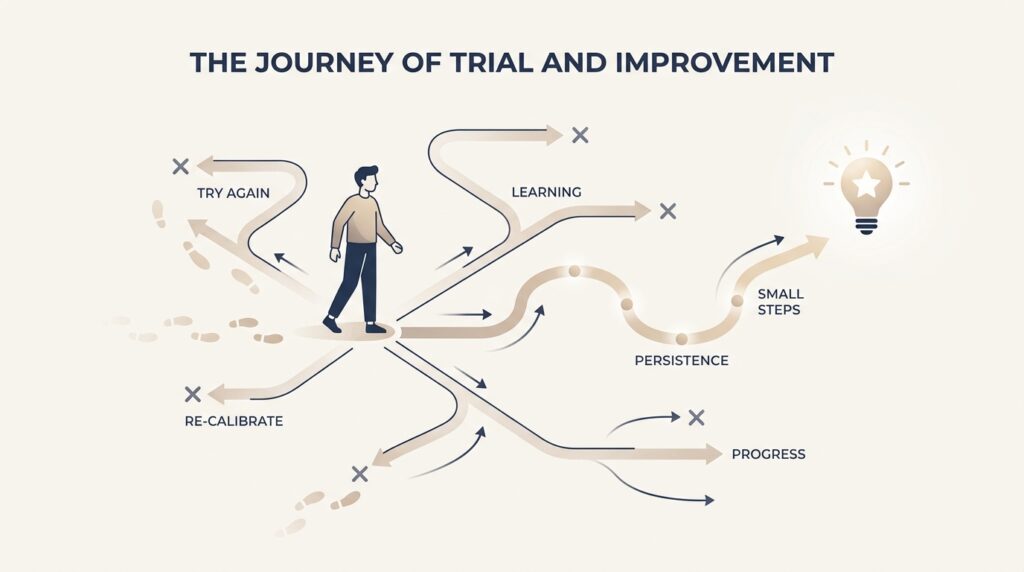
But in the majority, because of which they became famous, because of that people felt that mostly it is a matter of pitch, meaning that you try to work, someone was trying to work at some age. You have to clear the cigarette, open the app, you have been giving the paper for 12 years but it is not happening, so what happened is that you are giving exams, some average, some difficulties are coming, you are improving attention and trying again, so what happened is that you will comment on errors, repeatedly trying, so trying became viral. After that, ultimately, you will achieve the goal, the problem that you wanted to solve will be solved, and your work will be completed.
So this is a little about trying and about the feed, how you will learn, and they talk about it.
Experiments in Thorndike’s Theory
Cat Experiment
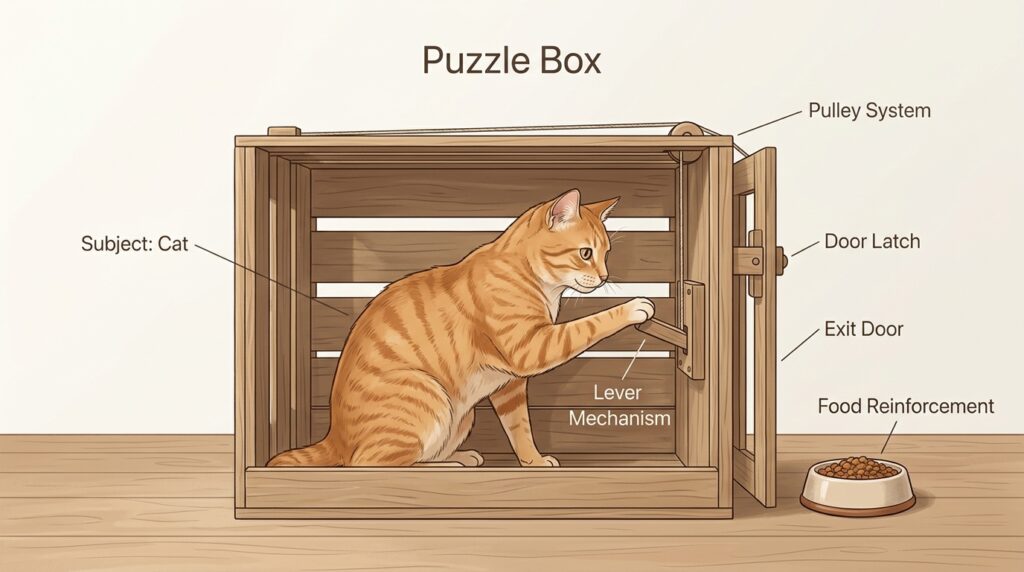
Let us see their experiments once. The experiment that I will tell you about is related to a cat. Now, whenever you search for images related to a cat, you will find many kinds of boxes, and in these, there are different types. Two experiments are there that you should know. The point is that one cat was taken, and that cat was kept inside a box. Now, from here it is transparent, there is a small transparent part here, so just that you should understand, take a room, take one, put the cat inside it, and there an attachment is fixed.
Learning Through Repeated Practice
Now, the point here is that you keep something in front of it so that it can get something. In a bowl, what is there, so it should respond when it feels hungry. In the beginning, it tried to search and understand, then its foot fell here, then it opened the gate and could eat food. After that, when this was repeated, when the experiment was done with it for the first time, it took more time, then that time started decreasing, that is, you closed the cat and you want when it will come out, so that time kept decreasing, meaning when you practice, repeatedly doing something, then the cat will understand that by pressing this or touching this, the gate will open.
Final Stage of Trial and Error Learning
So what will it do, in the last stage, a point will come when you put the cat inside and as soon as it responds quickly, it will not try anything else, then what it thought, when it needs something, it is being fulfilled from here, so by trying again and again, after that trial, after that stage, a stage will come when you will learn that particular thing properly. This is called the trial-and-error experiment.
Fish Experiment
Now you should also know another experiment related to fish. What they did was that there were two partitions, but a partition was made in one of them. Inside that partition, a small hole was left so that if the fish tries, it can cross. Just like it was said here that if the cat tries, after pressing, it can come out. So they took fish, and they used them in their experiment. And the tendency of the fish is considered such that it likes to stay in a shaded area; it does not like light.
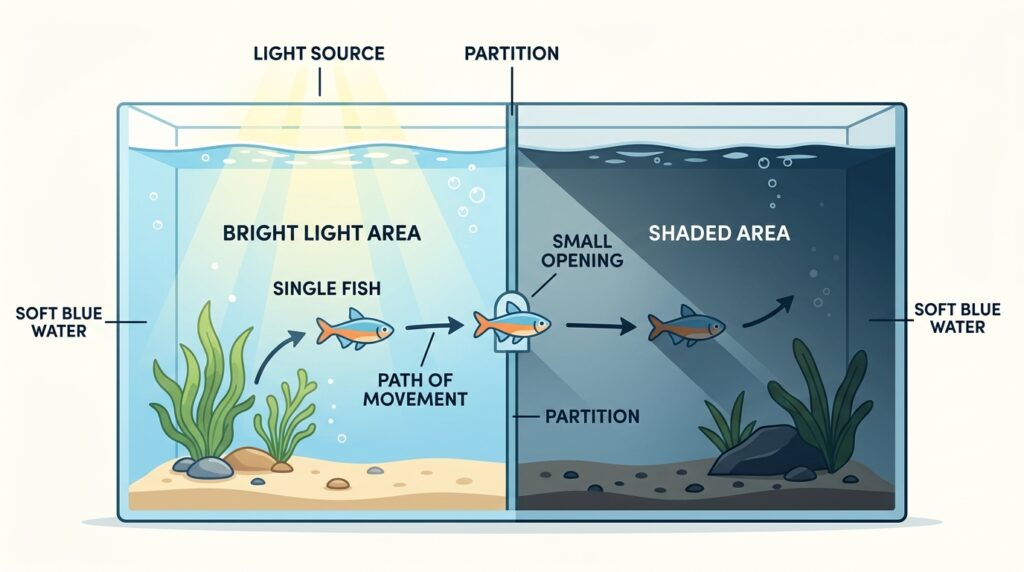
So what they did is that on one side of the partition, light was put. Then it started moving because it did not like that area. Now it started trying, and at the ultimate point, after many attempts, it came out from there and went to the other portion where there was no light, and there was shade, which it liked. Then it changed position. So by doing this, it happened that in the beginning, it did not understand at all, but gradually it learned to reach the hole and then go to the other side.
Thorndike’s Theory of Laws of Learning
Now we talk about the laws of learning. There are two types of laws that we study:
- Primary laws
- Secondary or subordinate laws
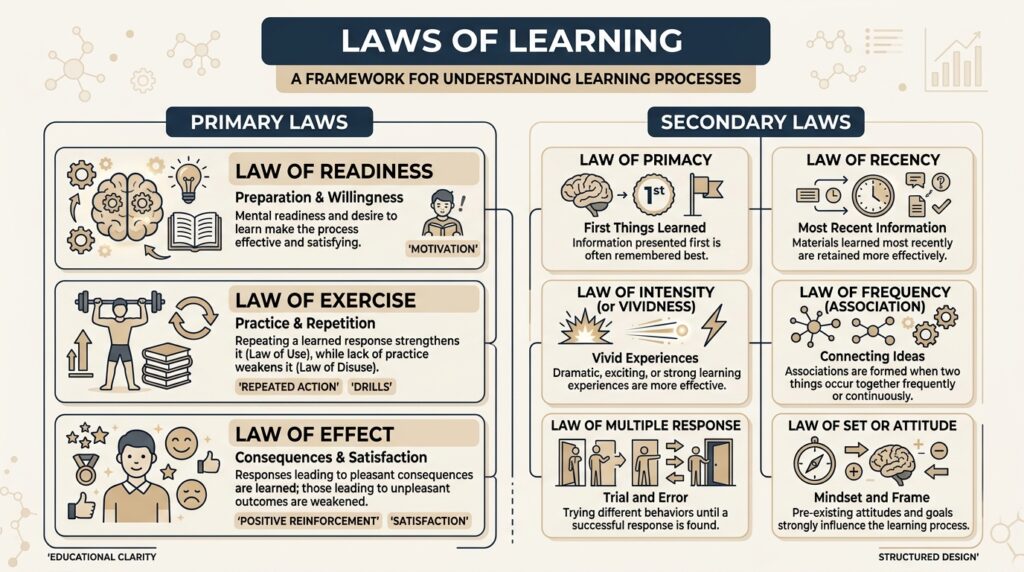
So, regarding these laws, you should know that there are three primary laws, and all the rest are subordinate laws. Secondly, you should have an idea that if in an exam you are given something, you should be able to identify which law is being talked about.
For that, you will have to understand all of these in detail at the conceptual level, because in the upcoming exams, questions will come at the application level. Whether it is CTET, REET, or other exams, such topics are asked. If you are preparing to become a teacher, then questions are asked in a modified way. Earlier questions used to be very easy, but now things have changed. Now facts are also asked, and behavior is also tested, to see how your behavior is.
If you think from the perspective of a child, what kind of behavior should be there, then the best version will come out, and because of that best version, you will be able to solve all questions. Therefore, you have to understand things at the conceptual level.
Thorndike Theory Key Concepts
Law of Readiness
Now we talk about the first law, which is the law of readiness. Readiness means being ready. If you have heard about school readiness, it means whether a child is ready to go to school. That is why children are sent to play schools so that they can be made ready. Because if you force a child to sit, the child doesn’t need to study.
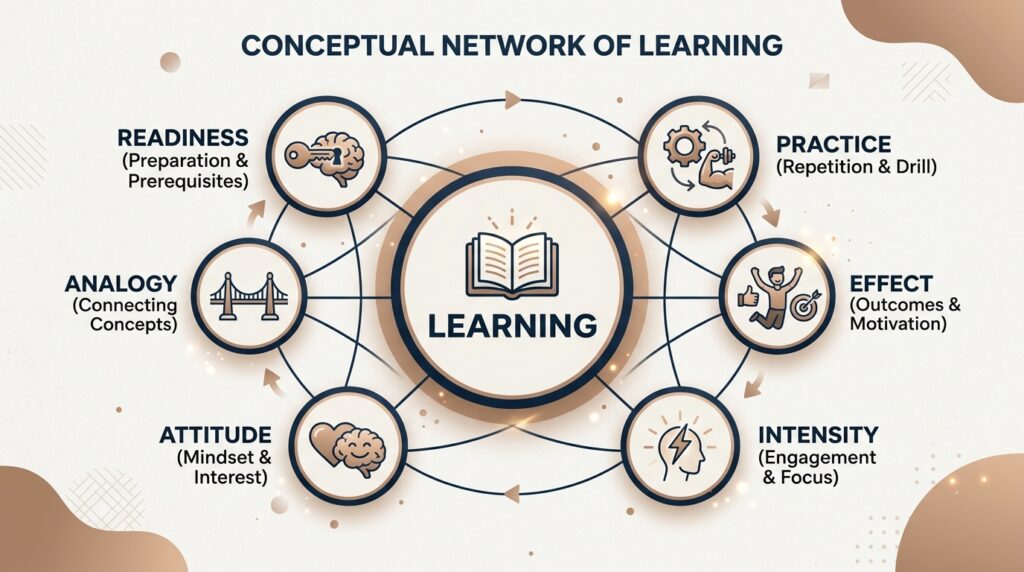
So what is necessary is that the child should be ready. So the state of being ready is called readiness. Whenever we talk about learning, before learning anything, it is very important to be ready.
Law of Exercise or Practice
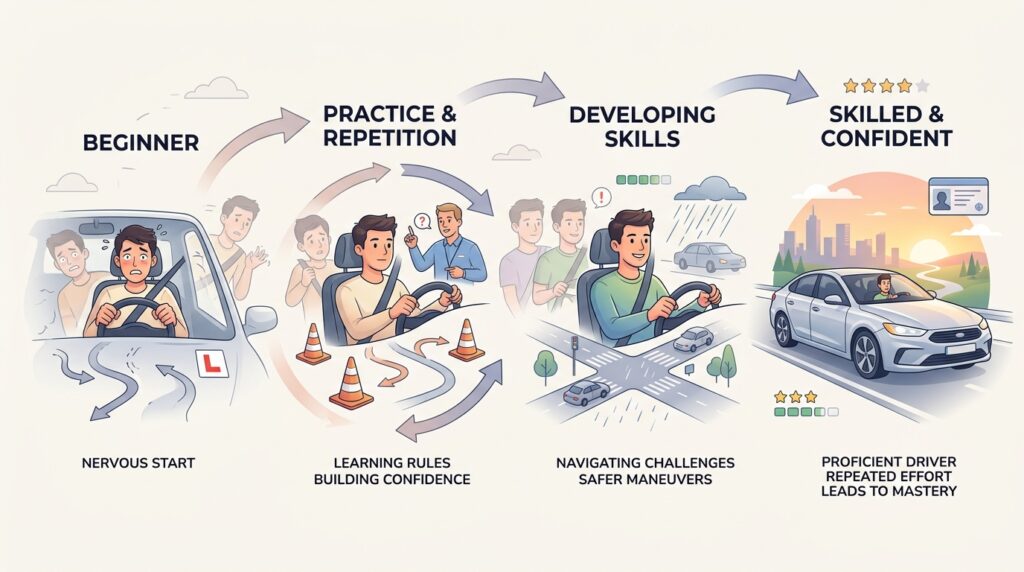
Then comes the law of exercise or practice. It is said that by practicing again and again, a person becomes skilled. When something is used repeatedly, it becomes stronger. If you learned to drive but have not practiced for years, then your ability becomes weak. So the things that are used more become stronger in learning.
Law of Effect
Now comes the law of effect, which tells what impact learning has. Then there are subordinate laws like recency and primacy.
- Primacy means that what you learn first stays better in memory.
- Recency means what you learn recently stays better.
Principle of Intensity
Then there is the principle of intensity, which means that the more interesting and dramatic a learning experience is, the better it will be remembered. For example, if a teacher explains a volcano through an experiment, it will be remembered better.
Multiple Response and Attitude
Then there are multiple responses, which means trying different ways to solve a problem. Then there is a set attitude, which means your mindset towards learning. If your attitude is negative, learning will not be effective. If you are curious, learning will be better.
Assimilation and Analogy
Then there is assimilation and analogy, where you connect new knowledge with your previous knowledge or daily life experiences. This makes learning easier.
Stay Connected with us!