
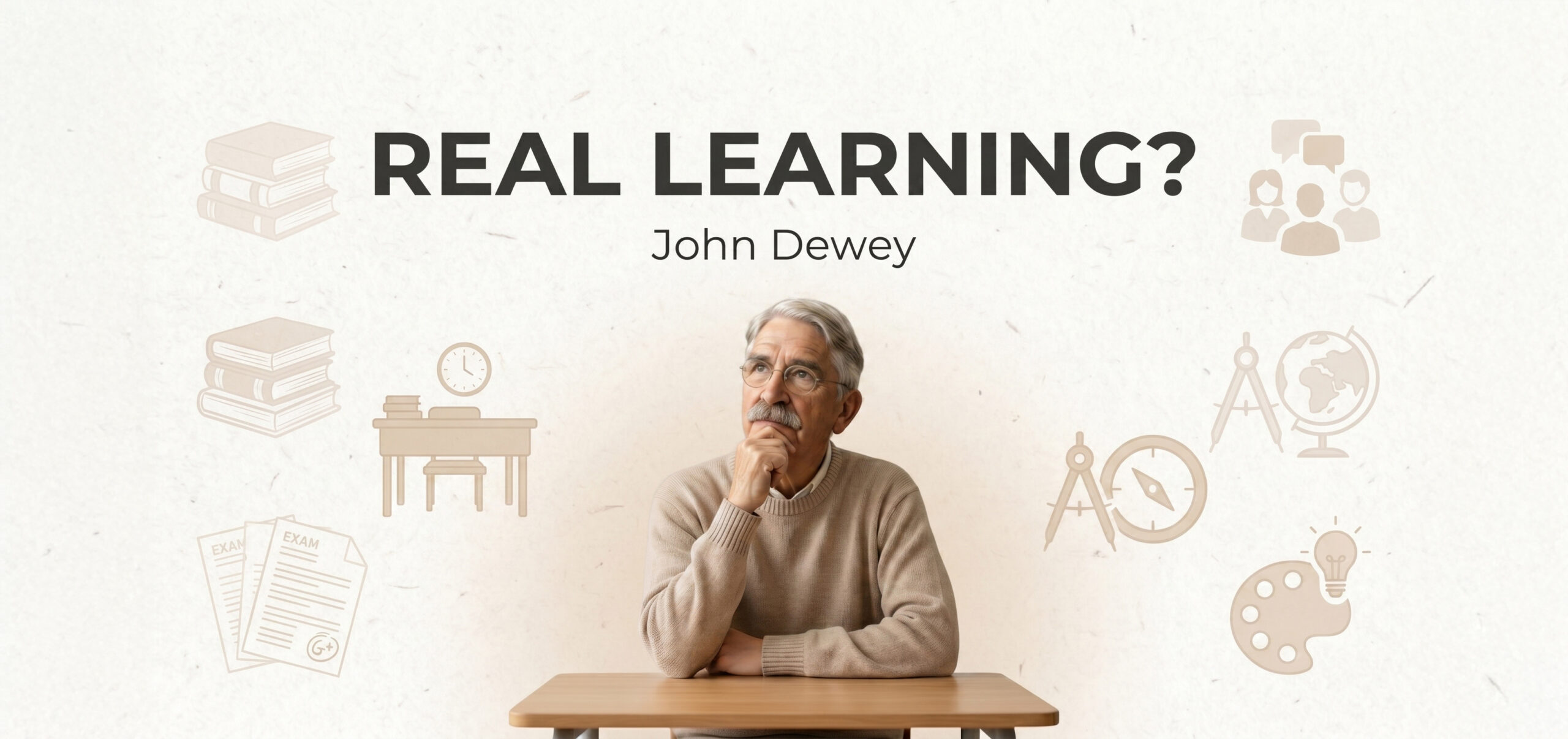
John Dewey was an American philosopher, psychologist, and educational reformer. His influence on the development of education in America and across the world was quite significant.
He believed that education should not be pragmatic. Instead, it should be based on a student’s needs and interests. This means necessity and curiosity.
He also believed that education should be democratic and inclusive. Schools should function like community centers from where the community can receive resources and be able to support society.
Think of it like this: if a student comes out of school as a sensible individual, they will serve the community. That is, society—whether as a farmer, a businessman, or possibly as a good teacher.
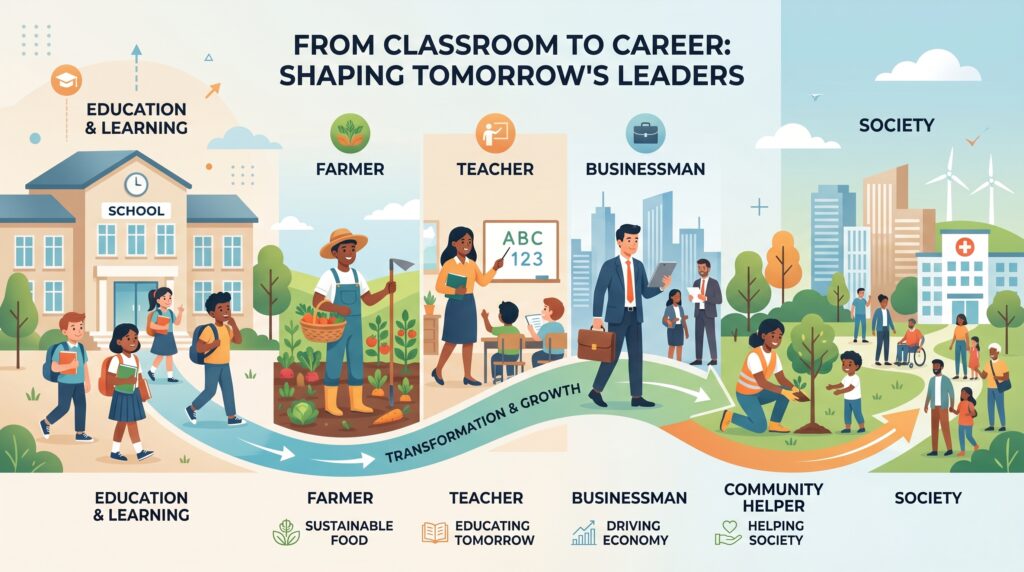
John Dewey’s Work and Key Ideas
John Dewey’s work had a strong impact on education in history. His key ideas were experiential learning, progressive education, integrated curriculum, and viewing the teacher as a facilitator.
Number one: Experiential Learning
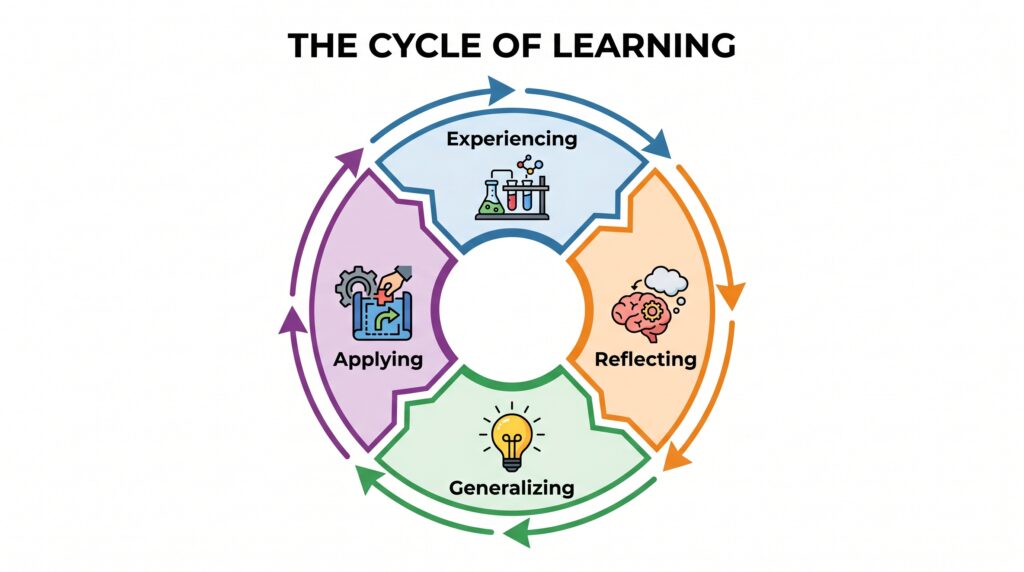
According to experiential learning, learning should not focus only on knowledge and skills. It should be based on practical experience and on how to solve real-world problems. According to Dewey, experiential learning is a cyclical process that has four stages:
- Experiencing
- Reflecting
- Generalizing
- Applying
As is obvious from the name, in the experiencing stage, a learner engages in experiments. In the reflecting stage, the learner reflects on their experiment and thinks about it. During the generalization stage, the learner forms statements.
- Finally, in the applying stage, the learner uses what they learn to solve real-life problems.
Number two: Progressive Education
Here, progressive education means such education in which learning is student-centered. There is project-based learning. The focus of education stays on social responsibility and your participation in society. People later called this movement the Progressive Education Movement. Dewey’s ideas strongly supported the progressive education movement of the 20th century.

As we have read so far, Dewey saw schools as community centers. Such citizens emerge there who can solve the problems of the world. This was almost similar to the objective of the progressive education movement.
Dewey’s Third Idea: Integrated Curriculum
Dewey’s third idea was the integrated curriculum. As we already know, Dewey saw schools as community centers where students develop into responsible individuals who can contribute to society. And how will such a person develop in school?
When the school’s curriculum is designed in such a way that knowledge and skills are taught which enable them to contribute to society as future citizens.
This means the school curriculum should be integrated with the issues of broader society; it should not be separate from it.
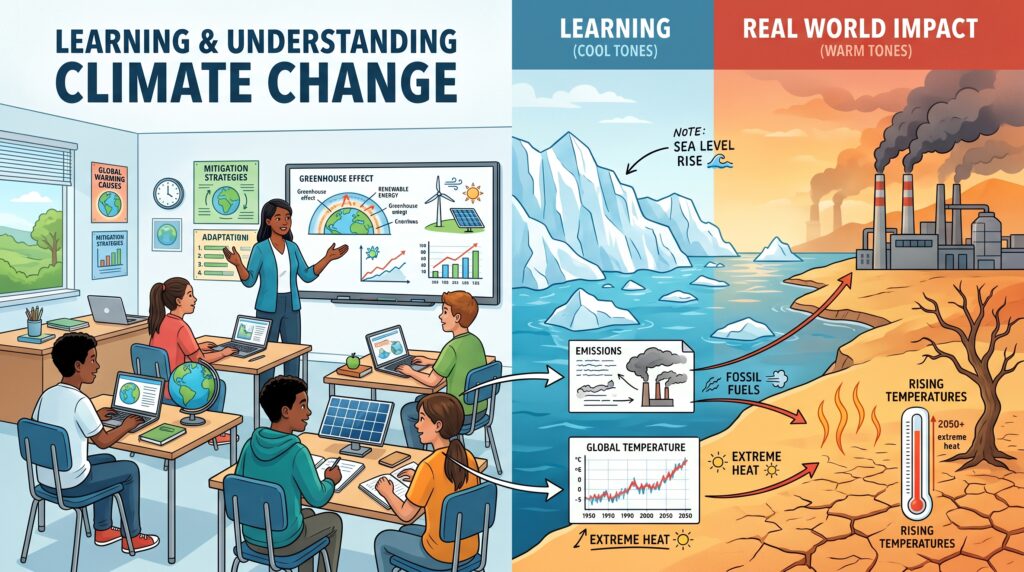
For example, nowadays we see that global warming and the climate change caused by it are affecting the entire world. If we follow Dewey, then schools should definitely include the topic of global warming in the syllabus so that students learn about it and provide solutions to this problem in the future. Think, if schools in India do not teach students about global warming even up to graduation.
Dewey’s Fourth Idea: Teacher as a Facilitator
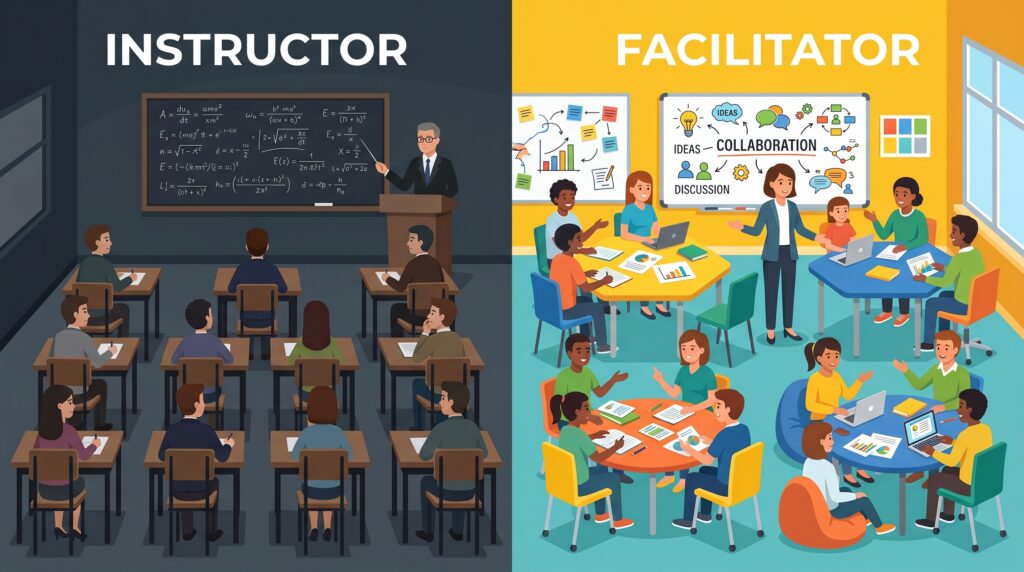
Dewey’s fourth idea was the teacher as a facilitator. This means the role of the teacher should be like a facilitator. Dewey said that a teacher should not be like an instructor, but rather like a facilitator—not an instructor who fills all the information into the student’s mind and says memorize it and bring it to the exam, only then will you get good marks—but the teacher should be a facilitator who helps students explore their interests and develop their own understanding of the world, not impose their own thinking on students.
There is also one question from me to you all: tell me, in your school, were teachers facilitators or instructors? And if any teacher was a good facilitator, then explain with a real-life example how they used to facilitate.
Example of John Dewey’s School in Real Life
Now, let us understand with the help of a small example how John Dewey’s school might have functioned in real life. Imagine there is a science teacher who has to teach the topic of environmental pollution to their students. Instead of finishing this topic by giving a lecture and homework, the teacher, inspired by Dewey’s ideas, initiates something like this.
First of all, the teacher can organize a field trip in a nearby area of the school where there is a lot of pollution, where people throw the garbage of the whole town, where a dirty drain flows into a canal, or even in your own colony, where people scatter garbage everywhere.
After that, the teacher can invite an expert and ask them to share about environmental challenges. After this, the teacher forms small groups of students and asks them to choose an environmental challenge, reflect on possible solutions, and create a project based on it. Some groups might work on household waste segregation, some on water pollution, etc.
And finally, the groups share their findings in the classroom and debate on them so that their understanding of this topic becomes better.
Something like this would be John Dewey’s school. If you observe carefully, this kind of school education includes almost all of Dewey’s ideas—such as progressive education, solving real-world problems, and an integrated curriculum—and here the teacher works as a facilitator rather than an instructor. Children are getting full chances to explore.

Conclusion
John Dewey’s ideas show that education is not just about memorizing facts, but about understanding life through experience. His vision focuses on making learning meaningful, practical, and connected to real-world problems.
When students are given the freedom to explore, think, and apply their knowledge, they grow into responsible individuals who can contribute to society.
Even today, his approach feels relevant because it shifts the focus from marks to learning, from teaching to understanding, and from classrooms to real life. If schools truly follow these ideas, education can become something that shapes not just careers, but thoughtful and capable human beings.
Stay Connected with us!!
EduCare Society FAQ:
- What is EduCare Society?Q: What services does your agency provide? A: We specialize in photography, video production, and design solutions for brands and individuals. Whether you need a professional photoshoot, cinematic video, or creative branding materials, our team delivers high-quality results tailored to your vision. Contact us to discuss your project!
- How is EduCare Society different from a regular student club?Q: How is EduCare Society different from a regular student club? A: Unlike individual campus clubs, EduCare Society functions as a parent academic organization that provides governance frameworks, leadership models, and national collaboration opportunities for its chapters.
- How does the chapter model work?Q: How does the chapter model work? A: EduCare Society operates through independent campus chapters that follow a structured framework while aligning with institutional policies and academic standards.
- Is EduCare Society affiliated with any specific institution?Q: Is EduCare Society affiliated with any specific institution? A: EduCare Society is an independent academic initiative. Campus chapters function within their respective institutions while maintaining alignment with the organization’s broader mission.
- Who can establish a chapter under EduCare Society?Q: Who can establish a chapter under the EduCare Society? A: Students and faculty from institutions offering ITEP or teacher education programs can initiate a chapter, subject to internal guidelines and institutional approval.
- What support does the parent organization provide?Q: What support does the parent organization provide? A: EduCare Society provides structural frameworks, digital infrastructure support, leadership models, academic guidance, and opportunities for national collaboration between chapters.
- What is the long-term vision of EduCare Society?Q: What is the long-term vision of EduCare Society? A: The vision is to build a nationwide network of academic chapters that drive innovation, leadership, and excellence in teacher education aligned with NEP 2020.