

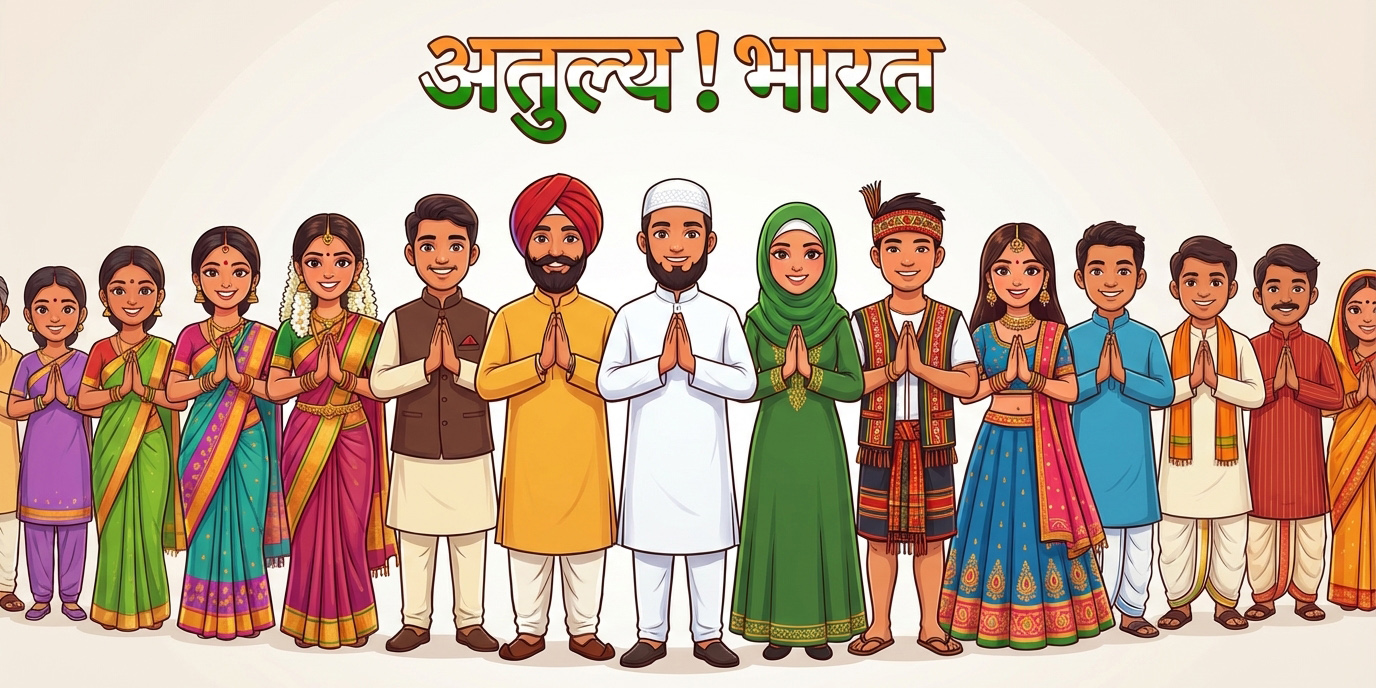
Everyone on earth is different from each other with respect to aspects like appearance, behaviour, culture, religion, language, talent, etc. This means that there is variation among people in these aspects.
Diversity means lack of uniformity and lack of sense of diversity. The feeling of diversity present in the characteristics, appearance, culture, religion, language, abilities, resources and opportunities belonging to
different people is called diversity.
Inequality among people occurs when they have different access to resources and opportunities. Caste system, religion, financial welfare, education, etc are various forms of inequality in the society. India is a country of great diversity, since it is a very big country, people in different parts in their customs, language, habits, etc. These variation arises from the fact that different regions have different histories and environments.
Reason of Diversity:
In ancient times, people used to move from one place to another due to war, famine and other reasons and due to lack of means of travel, they used to stay at the same place. Hence they used to learn the culture and knowledge of that place and develop knowledge of their old culture and new culture. New culture started emerging by creating harmony with.
Geographical factors are also important for diversity like climate, soil, monsoon, water, plains etc. People adopt their cultural traditions according to their geographical conditions.
Diversity Among People in India:
India is a country of immense diversity. People speak different languages, celebrate different festivals and eat different types of food.
Diversity is a reality created by individuals and groups from a wide spectrum of demographic and philosophical differences.
1. Linguistic diversity
India has hundreds of languages and dialects.Major languages include Hindi, Tamil, Bengali, Telugu, Marathi, etc.The Constitution recognizes 22 official languages.
2. Religious Diversity
India is home to many religions like Hinduism, Islam, Christianity, Buddhism, Jainism, etc. and have festivals like Diwali, Eid al-Fitr, Christmas reflect this diversity.
3. Cultural Diversity:
Different regions have unique traditions, customs, dance forms, and art.
Example: Bharatanatyam(Tamil Nadu), Bhangra(Punjab), Jhijhiya(Bihar)
4. Geographical Diversity :
India has different physical features like mountains, plains, deserts, forests and coastal areas, which influence people’s lifestyles.
5. Diversity in Clothes:
India shows great diversity in clothing. People wear different types of clothes depending on their region, culture, climate, and traditions.
- In many parts of North India, women wear saree or salwar kameez, while men wear kurta-pyjama or dhoti.
- In South India, people often wear saree, mundu, or veshti.
- In desert areas like Rajasthan, people wear bright and colorful clothes such as ghagra, choli, and turbans.
- In cold regions like Himachal Pradesh, people wear warm woollen clothes.
- In coastal areas like Kerala, people wear light cotton clothes because of the hot climate.
Factors affecting diversity:
Historical and geographical factors are two factors that influence the diversity of a region.The life of people on the sea shore is different from that of people in hilly areas because their environment and climate are different. People living near the sea mostly depend on fishing, trade, and tourism for their livelihood, and they eat more seafood. Their houses are often built to face strong winds and humidity.
On the other hand, people in hilly areas usually depend on farming, animal husbandry, and tourism. They grow crops suitable for cold climates and build houses with sloping roofs to prevent snow or rain from collecting. Thus, geographical conditions influence their lifestyle, food, occupation, and housing.
Diversity is affected by several factors such as geography, history, religion, language, economic conditions, and social traditions. Different climates and environments influence people’s lifestyles, while historical events and migration bring different cultures together. Religion and language also create differences in beliefs, customs, and communication. Economic and social conditions further shape the way people live, making society diverse.
Unity in Diversity
India is a country of different religions and communities. There is a lot of diversity in our habits and customs and yet we all live together as Indians. “Unity in Diversity” has been the distinctive feature of our country.
We are all Indians and during the freedom struggle, despite our diverse backgrounds, the entire country came together to drive out the British.
The Indian National Flag is the most important national symbol and it reminds us of unity in diversity.