
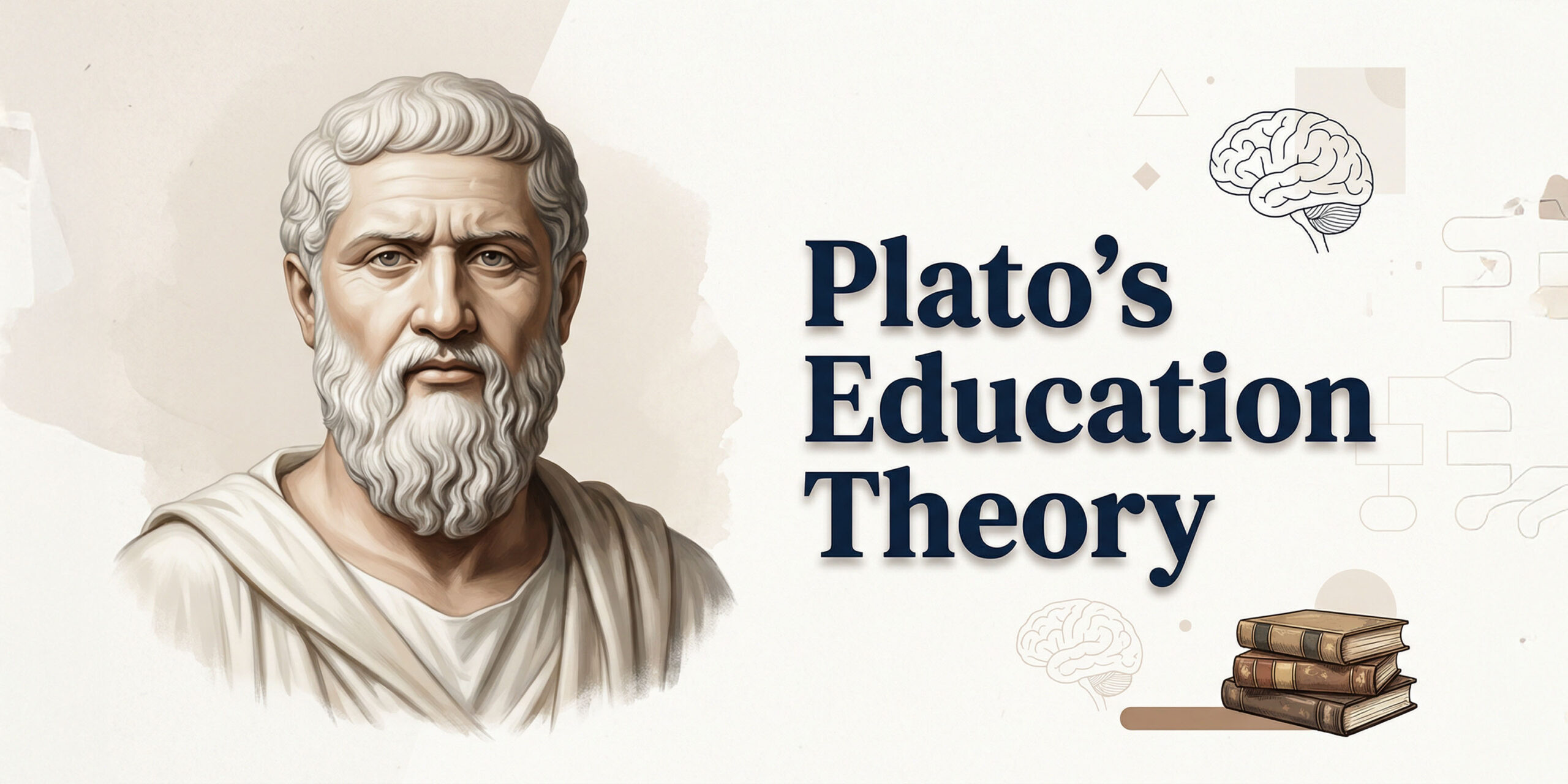
In this article, we’ll discuss Plato’s Theory of Education. It is very important to comprehensively understand Plato’s Theory of Education, to develop deep understanding, do read the article till the end.
Introduction to Plato’s Theory of Education
Plato’s Theory of Education. So, first we have to understand what is education. In the previous articles we have already covered, where we discussed Plato’s Ideal State, Theory of Ideas, Allegory of Cave, and after that we discussed Theory of Justice.
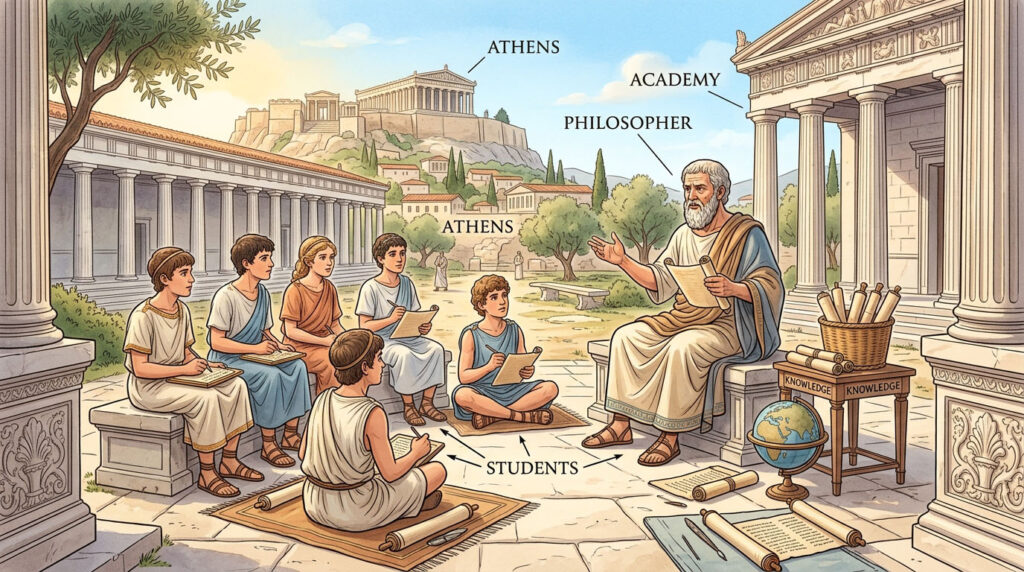
Objective Behind Plato’s Thought
Previously understood that Plato, what was his overall objective—to make Athens an ideal state, and what kind of ideal state—it would be a virtuous society, a just society, for which he gave proper Theory of Justice, Theory of Ideas.
Plato gave the Theory of Education. What kind of process will it be? Till now, Plato tells us that we must prepare philosopher kings as rulers and make society just and virtuous.
So, we make society just and virtuous, prepare philosopher kings to rule, and make them good rulers who possess knowledge—all this happens through the process of education, through a system of education.
Theory of Education and Soul
Education system that Plato suggested, and this education system is for both individual and society, it will do welfare of both, it is good for both. Theory of Education is a process through which we will deduct the qualities of the soul.
Plato divided the soul into three elements—that every soul has three qualities:
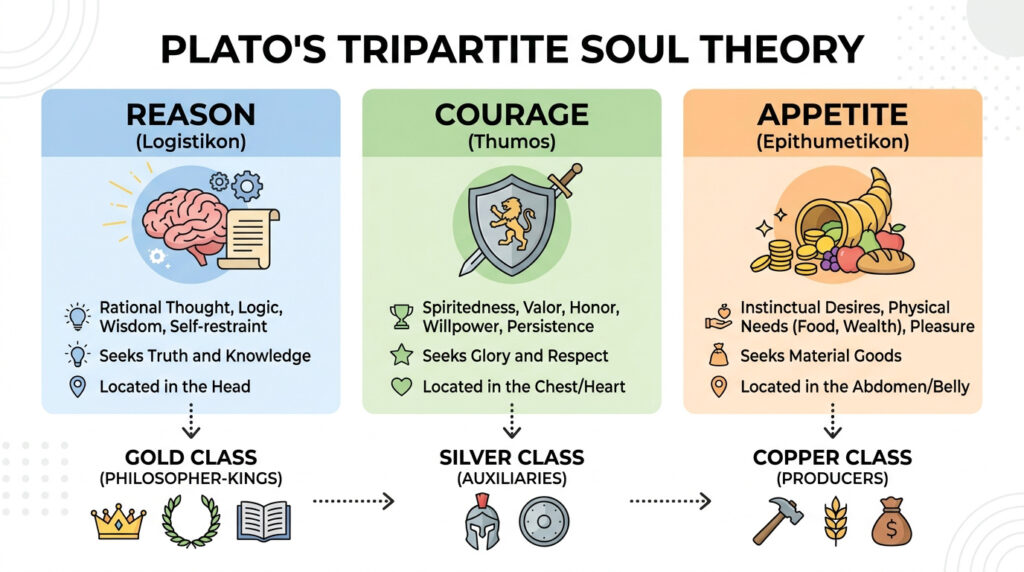
And on the basis of these three qualities Plato divided three classes:
- Persons of gold, whom we will call philosopher kings
- Persons of silver, whom we will call soldier class
- Persons of copper, whom we will call producer class
Now how will we identify which person belongs to which class, or which quality of soul dominates in which person. So to deduct and identify this thing, Plato gave his education system, and through this education process, the qualities of the soul will be deducted.
Background of Plato’s Education System
If we see the background of the education system, Plato was quite influenced by Sparta’s education system. But when Athens is defeated by Sparta, Plato wants to make his motherland Athens ideal, he wants to re-establish its glory.
So what will he do—he will bring the best system in Athens. For this he studies, analyzes the education system of Athens as well as Sparta’s education system.
So Plato finds out through his analysis that:
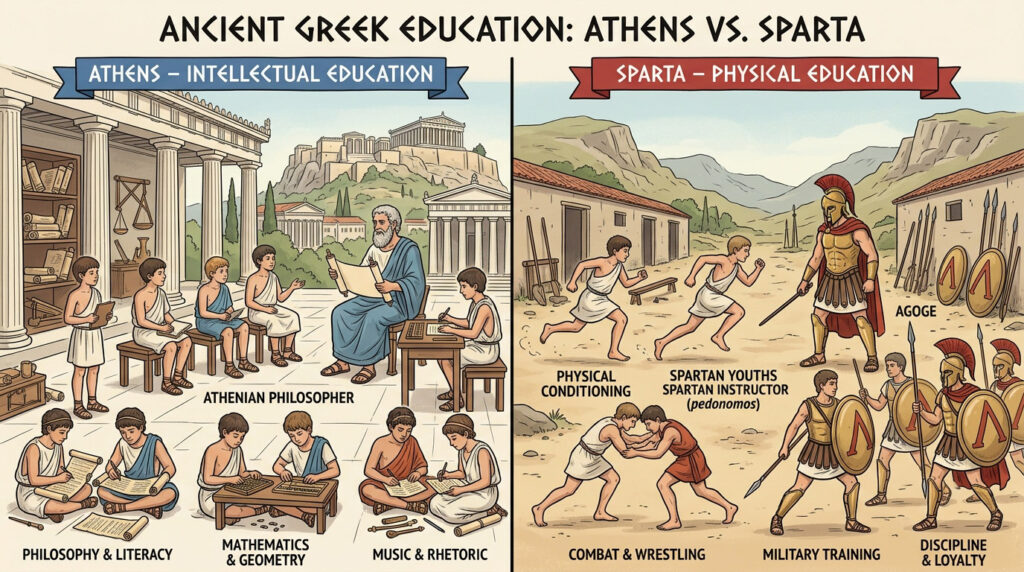
- In Athens logic, mathematics, philosophy, literature—all these are taught
- In Athens there is private education, meaning wealthy people hire private teachers and give education to their children
- According to Plato this is wrong, this should not happen
- We should give them equal opportunity to women, as they’re neglected for years.
So Plato takes one characteristic from Athens and rejects these two.
Then coming to Sparta, he sees that the education there basically focuses on physical education. So Plato says that along with physical education we also have to develop:
- Moral education
- Morality
- Values
- Logic
- Mathematics
- Literature
- Philosophy
Philosopher king should be moral, intellectual, and physically strong. So overall development is talked about.
Comparative Study and Formation of System
So by doing a comparative study of Athens and Sparta’s education, Plato will take out the best features from both and reconcile them and give his own education system.
So from Sparta he took:
- State education
- Equal opportunity to women
State education, meaning education system controlled by the state, universal nature of education so that everyone can get education.
When Plato has prepared this background, he took the best features from both, and Plato is more influenced by Sparta’s education system Now we’ll discuss Plato’s actual Theory of Education.
So he reconciled both, so he will give his own education system, so let us understand its characteristics, then we will see its criticism, then conclusion.
Features of Plato’s Theory of Education
So what are the main features of Plato’s Theory of Education:
- State sponsored and controlled education should be there
- Individuals’ behaviour and minds can be controlled
- Desired values can be inculcated
- Individuals should be just, have love for society, morality, values, justice
Then universalization of primary education:
- State should give education to all
- Not only wealthy people should get education
Then for women:
- Both men and women must be given education
Development should include:
- Physical
- Moral
- Mental
- Intellectual
Support of censorship of all literary and artistic work:
- So that youth does not come under bad influence
- So that desired moral goals can be achieved
Curriculum and Stages of Education
So Plato basically says that education is like wax, meaning you can mould it in whichever shape you want.
Stages:
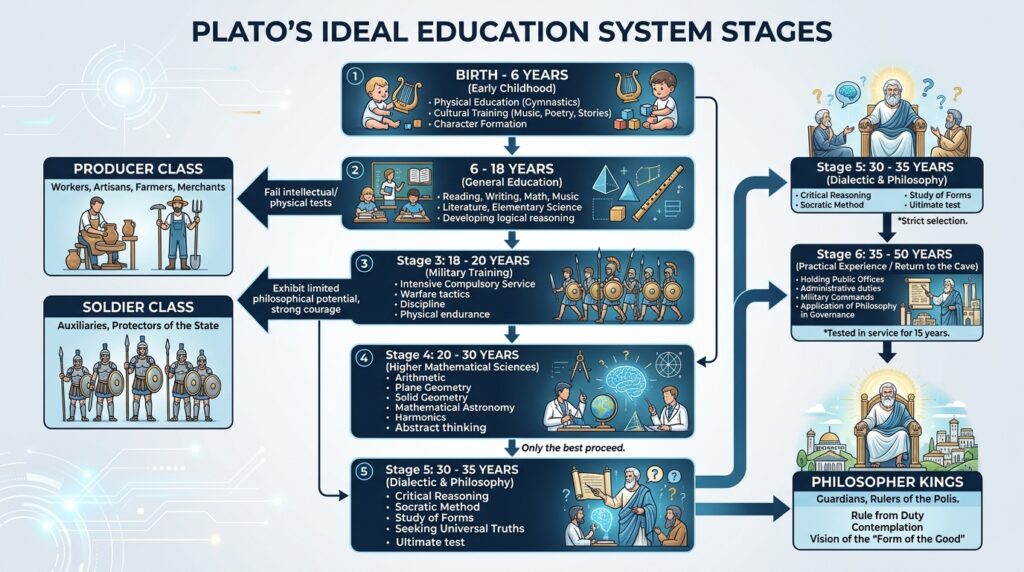
Pre-primary stage (0–6):
- Gymnastics
- Physical education
- Music
- Literary and moral values
Elementary stage (6–18):
- Mathematics
- Geometry
After 18 years:
- First screening test
- Fail → Producer class (appetite dominates)
Military training (18–20):
- Second screening test
- Fail → Soldier class (courage dominates)
Higher education and beyond:
- 20–30 higher education
- 35–50 practical education
- Become philosopher kings (reason dominates)
Three classes are formed:
- Persons of gold
- Men of silver
- Producer class of copper
Critical Evaluation of Plato
Some support Plato’s education theory.
- Barker says that Plato’s scheme of education is excellent
- Rousseau says that Republic is the best book ever, written on education
Positive Points:
- Rulers understand real knowledge
- Moral values develop
- Love for society and harmony
- Intellectual capacity develops
- True happiness comes from knowledge
Criticism:
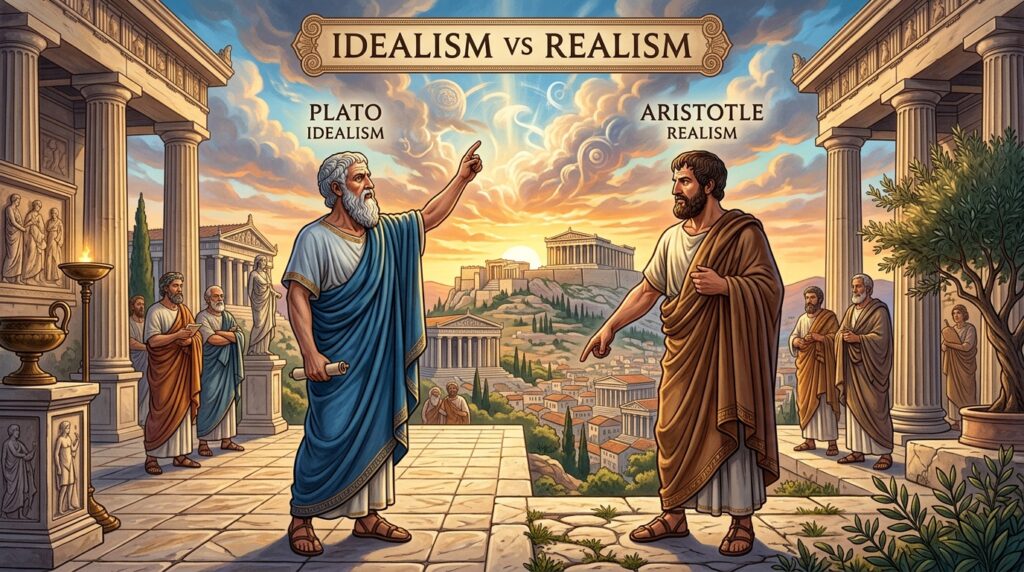
- Aristotle criticizes that we need to be wise in reality
- Censorship suppresses autonomy
- Opposes human psychology
- Not practical
- Too abstract and theoretical
Conclusion
Now after critical evaluation, you have to give conclusion, and that too a balanced conclusion, because both positive and negative exist.
So you will say that despite so many shortcomings and criticisms, Plato’s contribution to educational thought is very significant, because Plato’s aim was very broad—that is human well-being, to make society just, to bring justice in society. So it was good for both individual and society.
Overall, we must make human beings virtuous, and Plato’s just society gives education to all its members according to their ability.
Plato’s education system basically directs the attainment of the mind’s highest good, and that good is true happiness. In this way, it ensures the individual’s true development.
Final Remarks
So this is Plato’s Theory of Education, and I hope that you have understood Plato’s Theory of Education properly.
And if you have not watched previous lectures which include Theory of Soul, Theory of Ideas, and also we discussed Allegory, then do watch the first part video, because this education video is the third part. Before this we have already made two parts on Plato, so go and watch them and try to understand them.
Do tell in the comments how you liked today’s video, and whether you understood the Theory of Education or not. And second thing is that from my videos you should definitely learn answer writing. Whether you are giving semester exams or preparing for civil services, answer writing will help you a lot.